The facts behind the FY27 Chariho School District budget - what's in it, what's at stake, and why your YES vote matters on April 7.
The Facts
The real breakdown of the FY27 budget: what it costs, what it funds, and where the money goes.Note: Budget figures are projections based on the February adopted budget. Numbers may change as the district releases updates, and this page will be revised accordingly.

Why are there so many numbers?
When you hear the word "budget," it can mean different things depending on where it is in the process. A proposed budget is not the same as an adopted budget. An adjusted budget is not the same as an actual budget. Each stage reflects a different moment in a year-long process, with different decision-makers involved and different levels of certainty. Here's what each one means and why it matters.

Budget Highlights
The Chariho School Committee voted to adopt this budget and send it to voters for approval. What you see here is the official spending plan for FY27 as presented in the budget referendum. It reflects the district's best projections at the time and serves as the foundation for the coming fiscal year.Note: Budget figures are projections based on the February adopted budget. Numbers may change as the district releases updates, and this page will be revised accordingly.
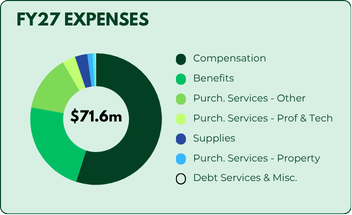
Compensation and Benefits: Salaries, wages, and stipends paid to district employees, along with associated benefits such as health insurance, retirement contributions, payroll taxes, and other employee benefit costs. This category typically represents the largest portion of a school district budget.
Purchased Services – Professional and Technical: Services provided by individuals or firms with specialized skills or expertise. This includes legal services, auditing, architectural and engineering services, consultants, contracted instructional services, therapy providers, and other professional support not provided by district employees.
Purchased Services – Property: Services required to operate, repair, and maintain district buildings and grounds. This includes utilities such as electricity, water, and heating fuel, as well as contracted maintenance, custodial services, waste removal, snow removal, and building repairs.
Purchased Services – Other: Operational services that do not fall under professional or property categories. This often includes transportation contracts, tuition payments to out of district placements, insurance, communication services, software subscriptions, and other contracted operational services.
Supplies: Consumable items used in instruction and operations. This includes classroom materials, instructional supplies, office supplies, custodial supplies, technology accessories, textbooks, and other items that are used up or replaced regularly.
Property: Capital outlay for equipment and tangible assets with a useful life beyond one year. This includes furniture, vehicles, technology hardware, machinery, and other equipment purchases that are not considered routine supplies.
Debt Service and Miscellaneous: Payments related to borrowing and long term obligations, including principal and interest on bonds or loans. This category may also include certain fees or costs that do not fit neatly into other object categories under state accounting guidelines.

Demystifying the State Funding Formula
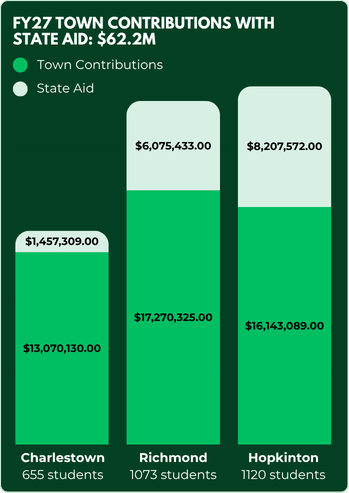
Every year, the state of Rhode Island runs a formula to determine how much education aid each school district receives. Understanding how that formula works helps explain why local budget decisions matter as much as they do.The money follows the student Rhode Island's funding formula is built around individual students. Every student enrolled in a public school generates a specific amount of state funding, and that money follows them to whatever public school they attend, whether that's a district school, a charter school, or a state school.

What's at Stake
What happens to programs, staffing, and services if the budget doesn't pass. The consequences for students and the community.

Celebrating Chariho
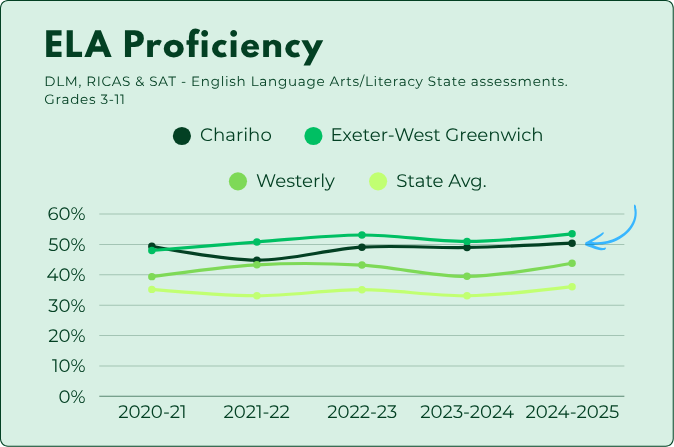
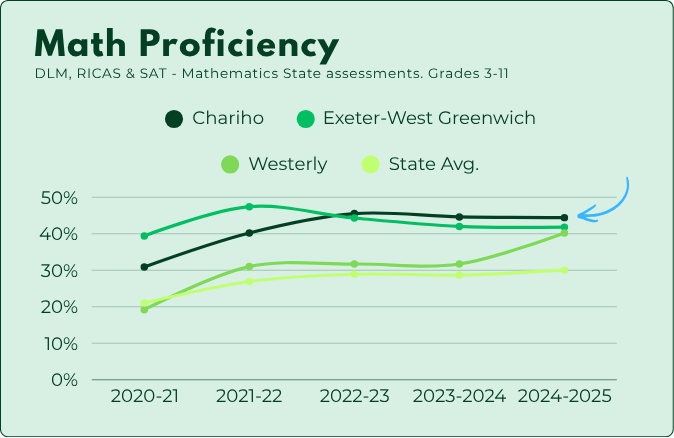
Chariho Regional School District serves three communities, Charlestown, Hopkinton, and Richmond, and it does so with something that deserves more recognition: results.There's a common misconception that Chariho's test scores signal a struggling district. The data tells a different story. Chariho's ELA and Math proficiency scores have been rising and consistently outperform the state average.Seeing less than 50% of students score "proficient" can sound alarming out of context. It isn't. These are rigorous state benchmarks, and Chariho holds its own against comparable districts and beats the state average.
Our graduation rate speaks even louder. At 95.7%, Chariho graduates students at a rate more than 11 points above the state average and well above the national average of 87%.
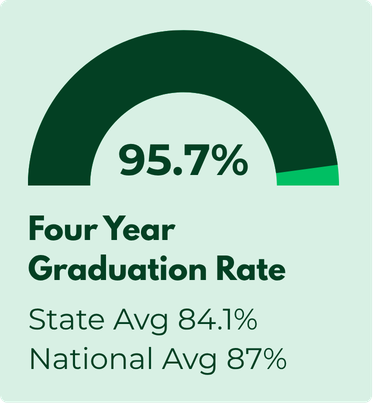
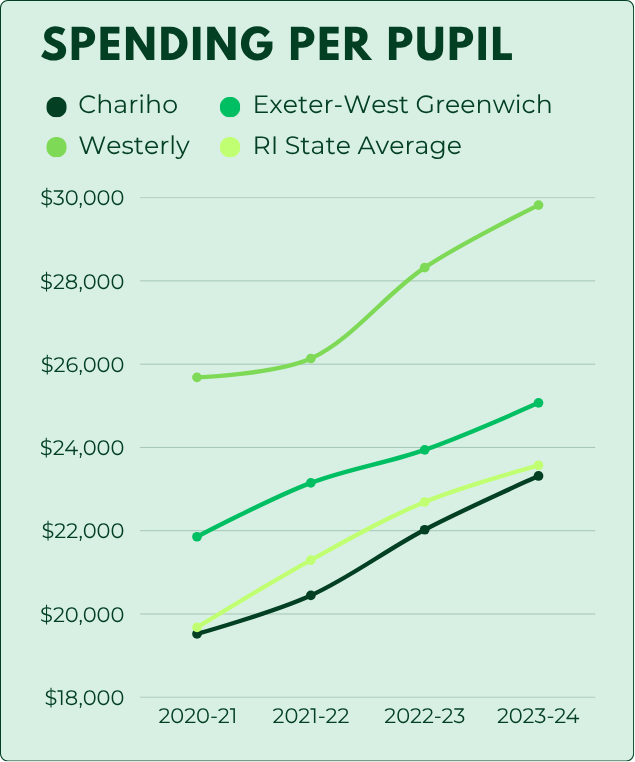
And we do all of this efficiently. Chariho spends less per pupil than comparable districts and below the state average, while delivering stronger outcomes.
CHARIHOtech offers more than 20 career and technical education programs, from Health Careers to Marine Technology to Culinary Arts, and several of those programs generate revenue for the district by offering real services to the public. The Chariho Alternative Learning Academy keeps high-needs students in-district rather than in costly out-of-district placements, providing specialized support while protecting the budget.
That's a district that takes care of its students and spends your money wisely. That's worth protecting.

Get Involved
How to spread the word, polling locations and ways to stay connected with Chariho United.

Student Impacts
There's no painless way to reduce a school budget. Every dollar cut comes from somewhere students notice.

Sports and Activities: For many students, sports are the reason they show up. Cutting athletic programs doesn't just affect scores on the field. It affects graduation rates and school culture.
Advanced Academic Programs: AP courses, Virtual High School, CHARIHOTech. These programs give students a direct path to careers or higher education. Once cut, they're hard to bring back.
Transportation: Fewer buses mean longer routes, more congestion, and more families scrambling for rides.
Electives: Art, music, world languages, and tech are often the first to go. These aren't extras. For a lot of kids, they're the hook that keeps them engaged.
Support Staff: Reading specialists, math coaches, counselors, and teaching assistants. Cuts here hit hardest for students who already need the most support.

Long Term Risk
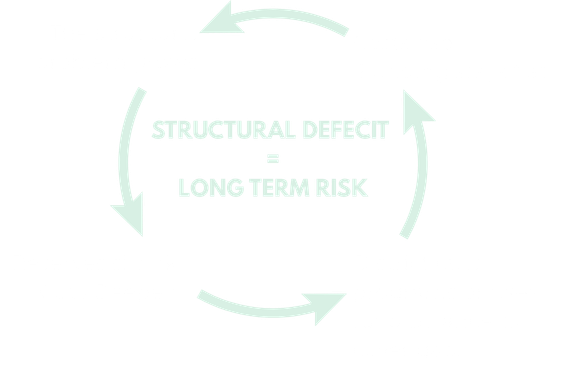
A structural deficit isn't a one-time shortfall. It means the district's built-in costs consistently exceed its reliable funding. Every year, the gap comes back, and every year it gets harder to close.Level funding accelerates this. When the budget can't keep pace with rising costs, the district starts drawing down reserves to cover the difference. Reserves run out. Then the choices get much harder.
This isn't about mismanagement. It's about math.

State Intervention
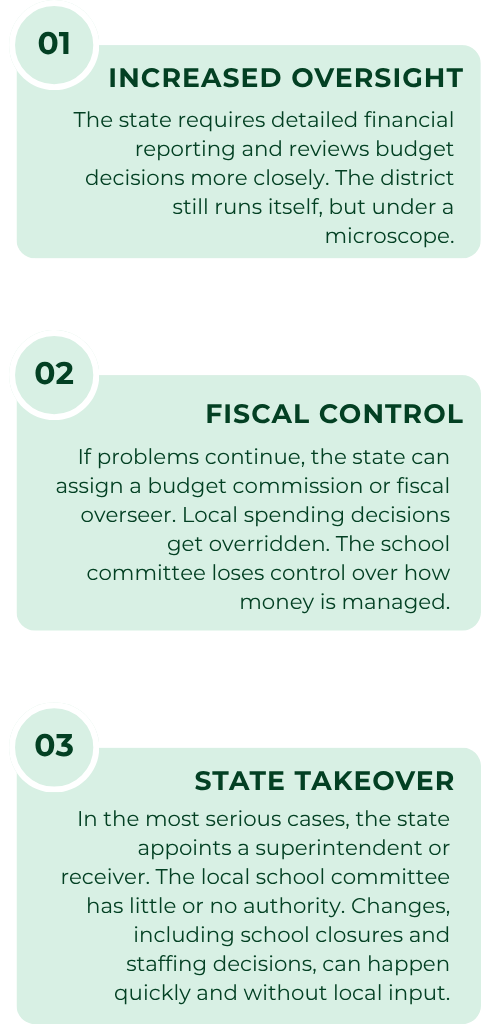
Rhode Island law gives the state significant authority over school districts in financial trouble. If Chariho's budget problems persist, that authority can be triggered.State intervention doesn't happen all at once. It happens in stages, and each stage means less say for Chariho families.
WHAT TRIGGERS THIS FOR CHARIHO?
Budgets that repeatedly fail to pass. Deficits the district can't cover. An inability to meet basic educational obligations.Level funding alone doesn't trigger state action. But level funding that leads to structural deficits can set that process in motion

What is Level Funding?

Level funding sounds neutral. It's not. It means the district gets the exact same dollars as last year, even when everything costs more.Heating. Utilities. Snowplowing. Transportation. Special education services. These costs don't hold still just because the budget does. When funding is flat and costs rise, the district has two choices: cut programs or drain reserves. Neither is sustainable.